


WHAT TO EXPECT AT YOUR EYE EXAM*
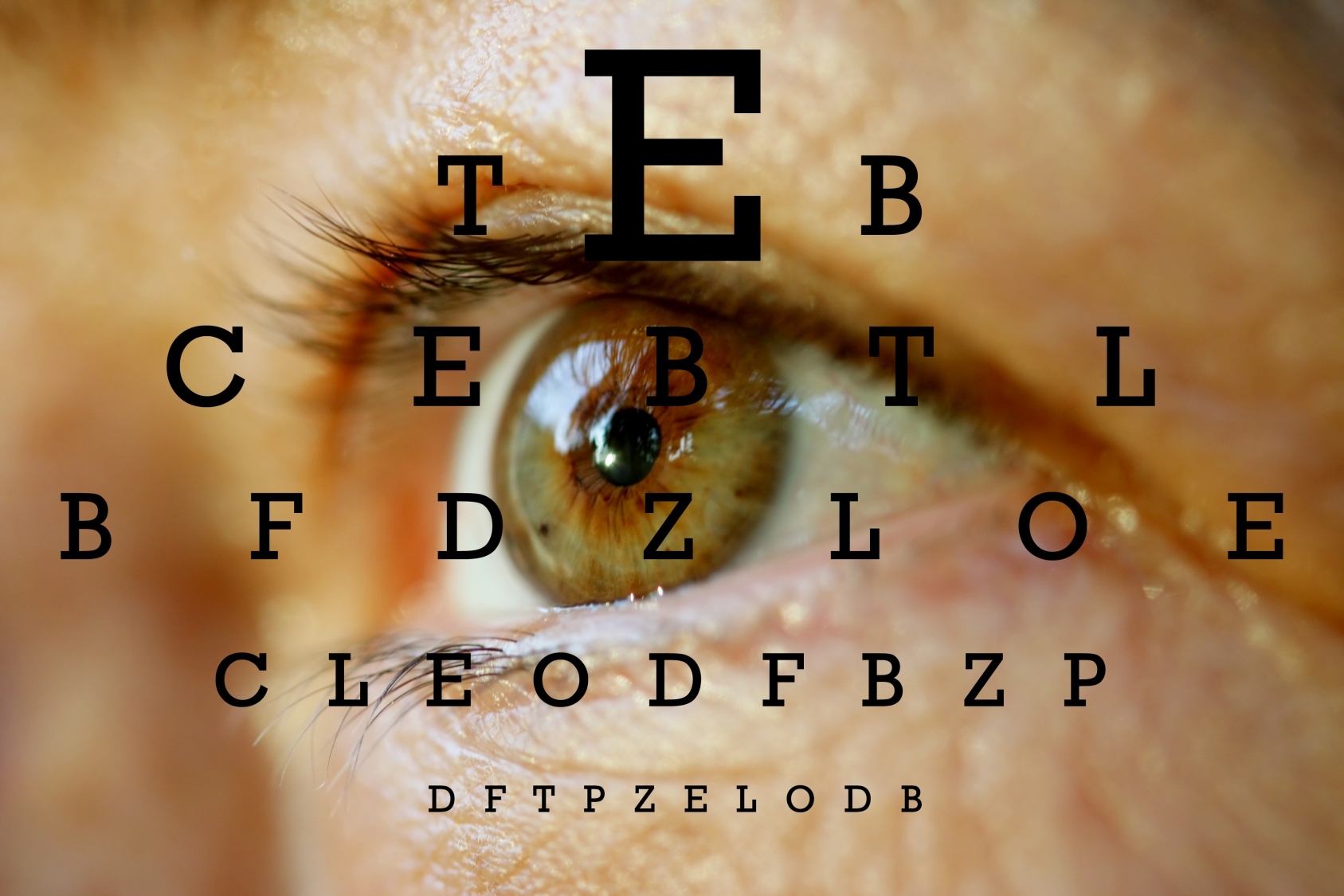
A typical eye exam checks both your eyesight and your eye health. Regardless of whether or not you have 20/20 vision, your doctor will check for near-and-far-sightedness. Then, the optometrist will put you through a series of tests designed to catch eye conditions and diseases early, such as glaucoma and cataracts. Here are just a few of the common tools your optometrist* might use during your exam.
Here are just a few of the common tools your optometrist* might use during your exam.
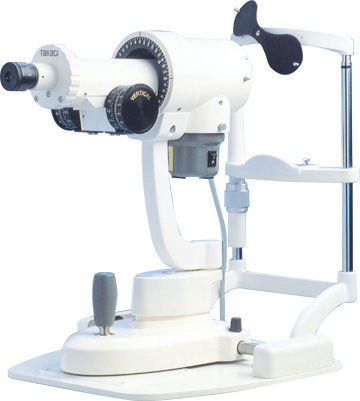 |
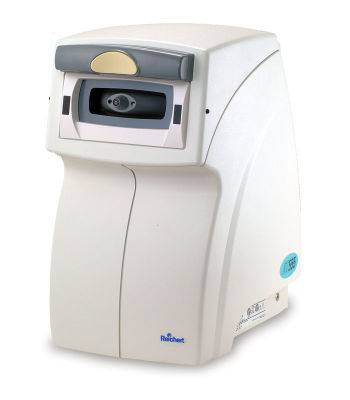
A keratometer, also known as a ophthalmometer, is a diagnostic instrument for measuring the curvature of the anterior surface of the cornea, particularly for assessing the extent and axis of astigmatism. |
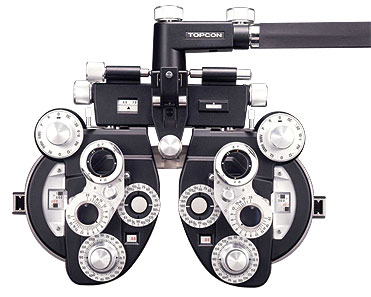 |
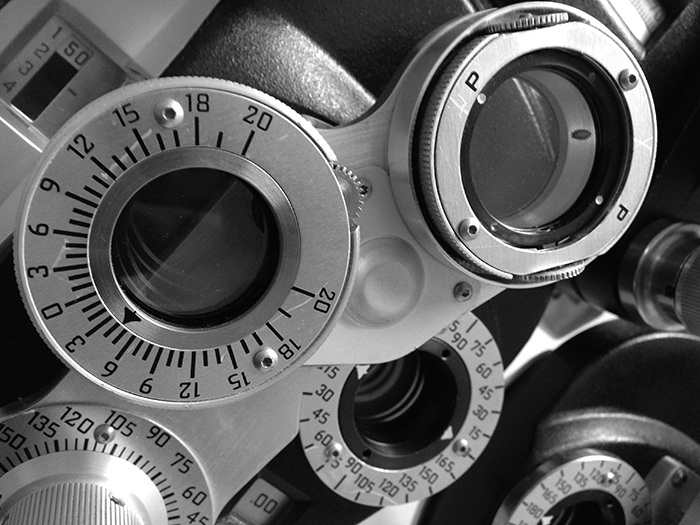
A phoropter is a common name for an ophthalmic testing device, also called a refractor. It is commonly used by eye care professionals during an eye examination, and contains different lenses used for refraction of the eye during sight testing, to measure an individual's refractive error and determine his or her eyeglass prescription.[1] It also is used to measure the patients' phorias and ductions, which are characteristics of binocularity. |
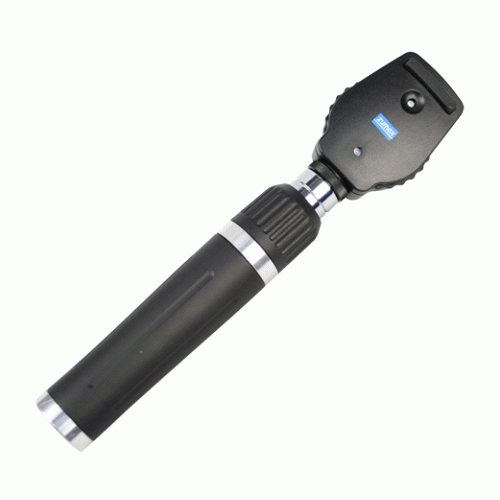 |
Ophthalmoscopy (funduscopy or fundoscopy) is a test that allows a health professional to see inside the fundus of the eye and other structures using an ophthalmoscope (or funduscope). It is done as part of an eye examination and may be done as part of a routine physical examination. |
 |
Tonometry is the procedure eye care professionals perform to determine the intraocular pressure (IOP), the fluid pressure inside the eye. It is an important test in the evaluation of patients at risk from glaucoma.[1] Most tonometers are calibrated to measure pressure in millimeters of mercury (mmHg). |
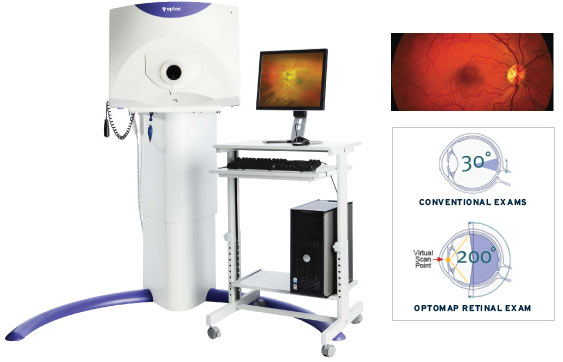 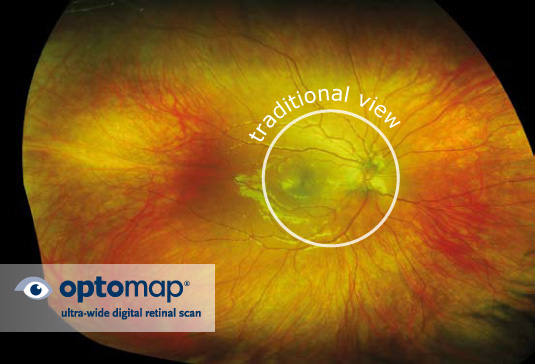 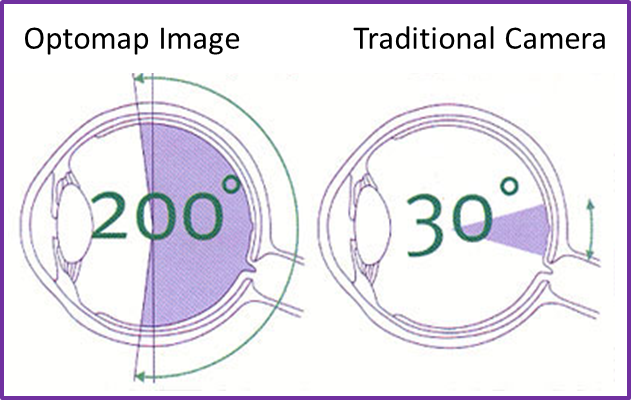 |
Optomap®Benefits of an optomap The benefits of having an optomap ultra-widefield retinal image taken are: Early protection from vision impairment or blindness Early detection of life-threatening diseases like cancer, stroke and cardiovascular disease The unique optomap ultra-widefield view helps your eye care practitioner detect early signs of retinal disease more effectively and efficiently than with traditional eye exams Early detection means successful treatments can be administered and reduces the risk to your sight and health. You'll leave your eye exam with accurate prescription for lenses and/or contacts and a recommendation for any necessary eyewear or lifestyle adjustments to keep your eyes healthy. You can take your new prescription into LensCrafters right away, or at a later time. Your prescription and vision records will also be kept on file with the eye doctor should you need to reference them. |